
Frequently Asked Questions
ABOUT OUR SERVICE
-
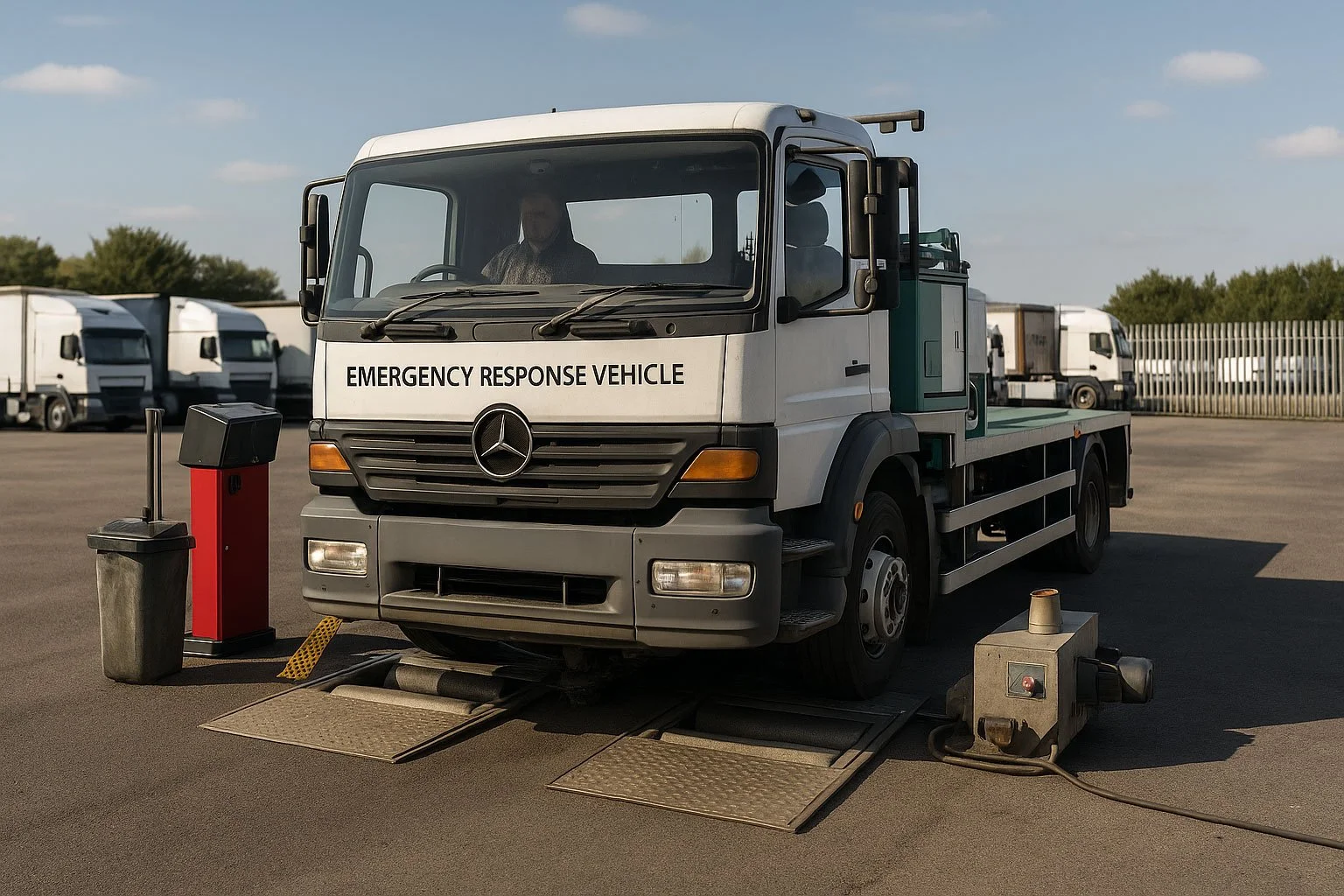
Mobile brake testing means we bring a DVSA-compliant roller brake tester to your site, so your vehicles are tested where they’re parked instead of having to travel to a test lane.
Each axle is driven onto rollers which simulate road conditions and measure braking force, imbalance and efficiency, giving a full picture of how the brakes are performing.
-
We can test most large commercial vehicles, including:
HGVs and rigids
Tractor units and trailers
PSVs and coaches
Drawbar and semi-trailers
Specialist commercial vehicles (subject to suitability of the vehicle and site)
If you’re unsure whether a particular vehicle or trailer can be tested, just send us the details and we’ll confirm.
-
Yes. We use DVSA‑approved equipment and follow the Guide to Maintaining Roadworthiness and the Heavy Vehicle Brake Test Best Practice Guide.
Our reports contain the data DVSA and Traffic Commissioners expect to see during audits or investigations, provided your vehicles are presented and loaded correctly.
-
Our core service is brake testing, but we’re also technicians. We’ll walk you through the brake test printouts, highlight any issues, and explain what they mean in plain English.
LEGAL & COMPLIANCE QUESTIONS
-
Under updated DVSA guidance (from April 2025), the expectation is:
A brake performance test at every safety inspection
At least four laden roller brake tests per year for HGVs and trailers
Your exact frequency will depend on your inspection interval and operating conditions.
-
A laden brake test means the vehicle/trailer is loaded to around 65% of its maximum weight (not less than 50% where possible). Testing unladen can give misleading results and may not be accepted by DVSA.
-
In most cases, you must present vehicles safely loaded with secure ballast or normal freight. If loading is difficult (tankers, mixers etc.), please contact us in advance.
-
Yes - provided vehicles are properly loaded and presented.
Our DVSA‑compliant brake test reports are suitable to attach to your safety inspection sheets.
-
We provide maintenance brake tests, not MOTs. However, regular meaningful brake tests will help your vehicles pass their MOT brake test and demonstrate compliance.
ON THE DAY OF TESTING
-
We need:
A flat, solid, level surface
Enough space to position the brake tester and manoeuvre vehicles
Safe access
-
Typically 10–15 minutes per vehicle. A well‑organised fleet can see 5–6 tests per hour.
-
We normally need a tractor unit or suitable tow vehicle with working brake and air controls.
-
Yes - DVSA expects every PMI to include brake performance assessment. We can coordinate with your maintenance provider.
RESULTS, REPORTS & FAILURES
-
A full DVSA‑compliant brake test report including:
Service and parking brake forces
Imbalances
Efficiency percentages
Lock‑up information
-
We will:
1. Flag the failure clearly
2. Explain the issue
3. Recommend it is removed from service until repaired
We can retest after repairs.
-
Yes - happy to review reports and explain what DVSA expects.
BOOKING & PRICING
-
We are a mobile on‑site service covering a wide UK region. Contact us with your location for availability.
-
Our pricing is simple - only £18 per axle. No hidden costs.
-
We have brake testers nationwide. Book anytime.
-